How to Choose the Best Specialized Boxes for Your Needs?
When it comes to selecting the right specialized boxes, expertise is essential. John Smith, a renowned packaging expert, once stated, “Choosing the right box can transform the way your products reach customers.” This highlights the significance of understanding your specific needs when it comes to specialized boxes.
Specialized boxes serve various industries, from electronics to food. They offer solutions tailored to unique products. For instance, if you are shipping fragile items, you need boxes designed to protect them. On the other hand, food packaging requires materials that ensure freshness. Think about the integrity of your products.
Making a choice can be daunting. You must consider durability, size, and function. It’s not just about aesthetics; practicality matters. Not every box will fit your needs perfectly. Evaluating options can sometimes feel overwhelming. Reflect on what features truly matter to your business and customers. In the end, the right specialized boxes can make a significant difference.

Understanding Your Packaging Requirements
Understanding your packaging requirements is crucial for selecting the best specialized boxes. Over 70% of consumers say packaging influences their buying decisions. This highlights the need for effective packaging that not only protects products but also communicates brand values. Different products have different needs. For instance, fragile items require reinforced packaging to prevent damage during transit.
Choosing the right materials can improve safety and sustainability. A study by Smithers Pira indicates that sustainable packaging solutions are projected to grow by 5.3% annually until 2028. This shift reflects increasing consumer demand for eco-friendly options. Packaging design should also consider dimensions, weight, and stacking capabilities. Each aspect influences shipping costs and storage efficiency, impacting your bottom line.
While it’s easy to focus solely on aesthetics, functionality must remain a priority. Careful consideration of packaging requirements ensures that your products are presented well and safeguarded. Packaging mistakes can lead to returns and lost sales, highlighting the importance of thoughtful selection. Continuous evaluation and feedback help businesses refine their packaging strategies and meet customer expectations effectively.
Identifying the Right Type of Specialized Boxes
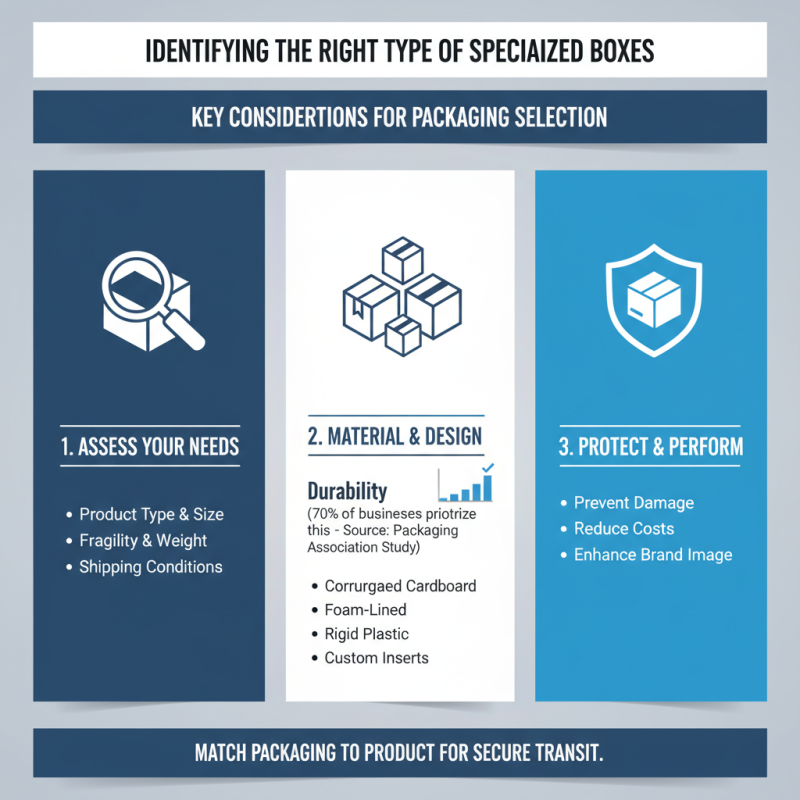
When selecting specialized boxes, understanding your specific needs is essential. Different materials and designs cater to varied applications. For instance, a study by the Packaging Association found that 70% of businesses prioritize durability when choosing a box. This preference highlights how critical it is to match your packaging with the product's requirements to prevent damage during transit.
Consider the box dimensions carefully. An ill-fitting box can lead to excessive movement and potential harm. The same report indicated that 50% of companies experienced product loss due to improper sizing. It's also vital to select a box that is lightweight yet sturdy. A balance between these factors improves shipping efficiency. Lightweight boxes reduce shipping costs, a major concern for many businesses today.
Environmental impact is another factor to reflect on. Eco-friendly materials are becoming a necessity rather than a luxury. A report from EcoPack revealed that 40% of consumers prefer products packaged in sustainable materials. Choosing the right specialized box requires a multi-faceted approach, considering performance, cost, and environmental responsibility. Striving for the ideal box challenges many, inviting continuous improvement in packaging decisions.
Evaluating Material Options for Durability and Safety
When selecting specialized boxes, material choice is crucial for durability and safety. Options such as corrugated cardboard, plastic, and wood each offer unique benefits. According to a 2022 report by the International Association of Packaging Professionals, 75% of boxes composed of solid board exhibit higher strength than traditional paper options.
Choosing the right material impacts how well your items are protected. Corrugated cardboard, for instance, is lightweight yet sturdy. It withstands pressure and provides cushioning. In contrast, plastic boxes resist moisture and can be reused multiple times. Wood, though heavier, offers strong structural integrity. However, wood can be susceptible to pests and environmental factors.
Evaluating these materials based on your specific needs ensures safety and reliability. Industry data indicates that nearly 30% of damage incidents during shipping are linked to inadequate packaging. Reflecting on your choices can lead to better strategies in protecting items. Careful consideration ensures long-term benefits, reducing waste and enhancing efficiency.
How to Choose the Best Specialized Boxes for Your Needs? - Evaluating Material Options for Durability and Safety
| Material Type |
Durability |
Safety Rating |
Best Uses |
Eco-Friendliness |
| Cardboard |
Moderate |
Good |
Shipping, Light Storage |
Recyclable |
| Plastic |
High |
Excellent |
Long-term Storage, Hazardous Materials |
Varies |
| Wood |
Very High |
Excellent |
Premium Goods, Antiques |
Sustainable |
| Metal |
Very High |
Excellent |
Tools, Equipment |
Recyclable |
| Glass |
High |
Good |
Food, Beverages |
Recyclable |
Considerations for Size and Dimensions
Choosing the right specialized box requires careful consideration of size and dimensions. These factors determine how well the box fits your items. A box that's too small may damage contents. Conversely, one that's too large can lead to excessive movement and inadequate protection.
Accurate measurements are essential. Measure the height, width, and depth of your items carefully. Consider adding extra space if you plan to include protective materials, such as bubble wrap or foam inserts. A snug fit is important, but not at the cost of your items' safety.
Sometimes, you might underestimate what you need. It's common to overthink sizes when you lack experience. A box that seems perfect might not work as planned. Test different sizes, even if it means being inefficient at first. This trial-and-error process can lead to better choices in the future. Don't hesitate to consult resources or professionals for guidance. Their insights can be invaluable.
Cost Analysis and Comparison of Different Box Options
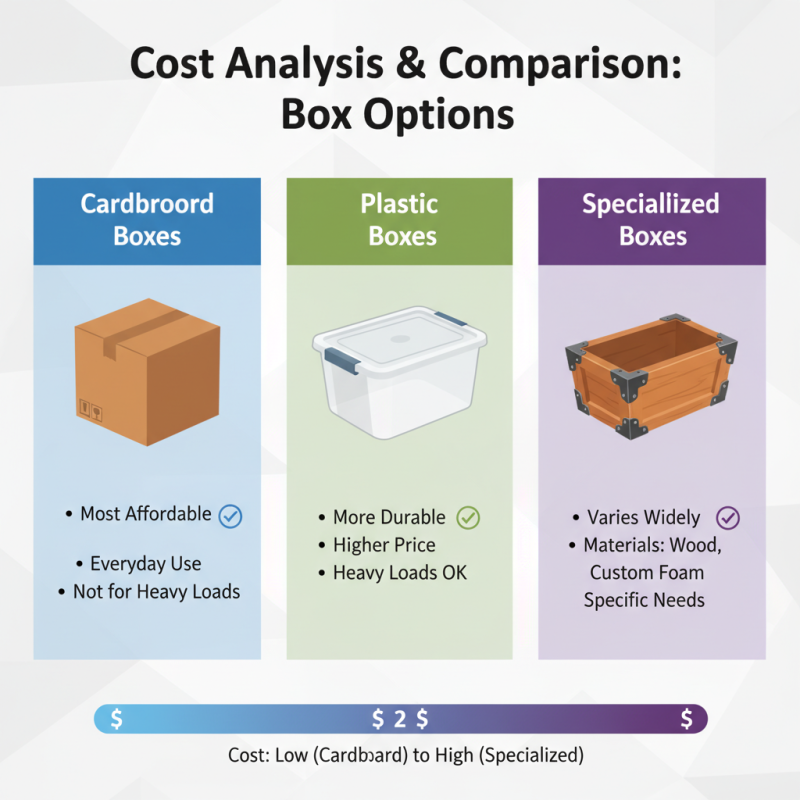
When considering specialized boxes, cost is often a major factor. Different materials, sizes, and designs can lead to significant price variations. Cardboard boxes tend to be the most affordable option. They work well for everyday use but may not hold up under heavy loads. In contrast, plastic boxes are more durable but can be pricier.
Think about your specific needs before making a choice. If you require something sturdy, investing in reinforced boxes might be worthwhile. On the other hand, if your items are lightweight and rarely moved, simpler options could suffice. You might also reflect on long-term storage costs versus short-term usage. Sometimes a slightly higher initial investment saves money over time.
Analyzing these factors requires careful thought. Look beyond just the price tag. Explore options that provide the best value for your situation. Evaluate not only the upfront costs but also durability and functionality. The right box can save money and effort in the long run, leading to a better overall experience.