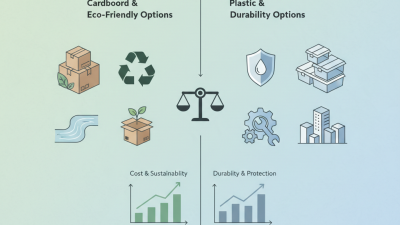
China’s packaging industry is expanding beyond low-cost production. It now supports food, cosmetics, electronics, healthcare, and e-commerce brands worldwide. This makes the search for China Top 10 Packing Packages Suppliers? more complex than a simple price comparison.
Smithers estimates that the global packaging market was worth more than US$1 trillion in 2023. Its report, The Future of Global Packaging to 2028, also highlights rising demand for recyclable materials, lightweight designs, and connected packaging. The World Packaging Organisation reports similar pressure. Companies must reduce material use while protecting products during long-distance shipping. Small details matter. Think stronger carton corners, cleaner seals, and consistent color matching.
“Packaging is the most tangible expression of a brand,” says Philip VanDusen, a packaging and brand consultant. His observation explains why supplier selection requires more than reviewing product photos. Reliable buyers should examine factory experience, material traceability, quality systems, production capacity, and export performance. Certifications such as ISO 9001 and FSC can provide useful evidence, but they do not guarantee perfect results.
This guide compares leading Chinese Packing Packages suppliers through practical criteria. These include customization, minimum order quantities, sampling speed, printing quality, sustainability options, and communication reliability. Some rankings may remain subjective. Supplier strengths can change with machinery upgrades, management changes, or raw-material costs. That limitation deserves attention. A beautiful sample may still fail during mass production. Careful verification remains essential before signing any purchase agreement.
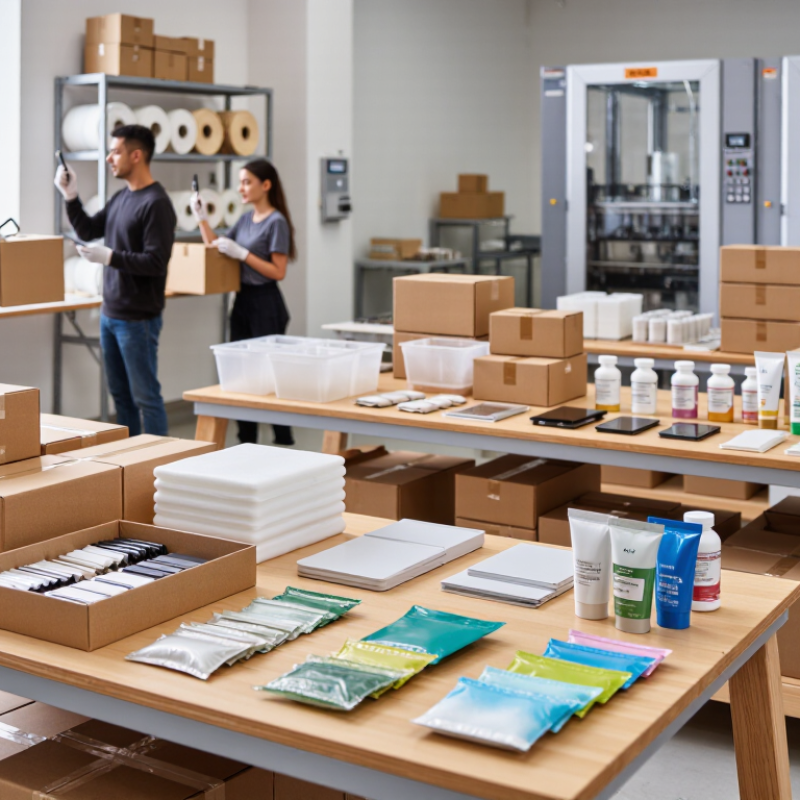
China’s packaging industry is broad, regional, and highly specialized. A useful top-ten supplier list should compare factories by material, not popularity. The State Post Bureau of China reported 174.5 billion parcels in 2024, creating strong demand for cartons, protective films, mailers, and paper-based solutions. Smithers projects the global packaging market will approach US$1.2 trillion by 2028. China remains central to this supply chain.
Supplier clusters often follow manufacturing ecosystems. Guangdong is strong in flexible packaging and printing. Zhejiang and Jiangsu have extensive paper, plastic, and molded-fiber capacity. Shandong and Anhui offer large-scale paperboard production. However, public rankings can be imperfect. Some “suppliers” are trading companies, not factories. That difference matters when checking production control, traceability, and delivery experience. Buyers should request recent audit records, material specifications, test reports, and samples from the same production line. ISO 9001 helps assess process consistency, while food-contact packaging requires additional legal compliance for the destination market.
ISO 9001 helps assess process consistency, while food-contact packaging requires additional legal compliance for the destination market.
Tips: Ask for a factory video call. Verify the business license. Compare three sample batches. Check carton compression strength, seal quality, ink adhesion, and moisture performance. Do not rely only on catalog photographs. A low quotation may hide thinner material, weaker testing, or outsourced production. I have found supplier claims can sound precise, yet the evidence remains incomplete. That deserves careful questioning.

China Top 10 Packing Packages Suppliers?
How the Top 10 Packaging Suppliers Were Selected
The ranking began with evidence, not online popularity. Smithers forecasts the global packaging market will exceed US$1 trillion by 2028. This growth increases pressure on Chinese suppliers to prove stable capacity and responsible production. We examined company history, factory capability, quality controls, export experience, and product consistency. Each supplier needed documented testing procedures, clear material specifications, and traceable production records. ISO-based systems were considered useful, but certification alone was not enough.
We also compared sample quality, response accuracy, minimum order quantities, lead times, and customization skills. Packaging machinery access mattered, especially for printing, sealing, molding, and inspection. Sustainability was reviewed through recycled content, material reduction, and packaging recyclability. The World Packaging Organisation’s global trend reports identify resource efficiency and circular design as major industry priorities. Pricing received a lower weight. A cheap quotation can become expensive after defects, delays, or repeated sampling. This part is imperfect. Supplier information changes quickly, and factory audits cannot reveal everything.
Tips: Ask for recent production samples, not only catalogue photos. Request test reports and material declarations. Confirm whether production is managed directly or outsourced. Check shipping records, complaint handling, and backup equipment. Compare delivered cost, not unit price. A small pilot order may expose problems early. Human judgment still matters.
The selection framework evaluates packaging suppliers using practical criteria commonly considered by international buyers. The percentages represent the weighting applied to each criterion when comparing eligible suppliers.
Product range and manufacturing capacity receive the highest weight because they directly affect sourcing flexibility, order scalability, and supply continuity. Quality systems, customization, export experience, and sustainability support the final comparison.
China’s top ten packaging suppliers are not identical factories. Each profile reflects a different production strength. One specializes in rigid cartons with sharp edges and magnetic closures. Another focuses on flexible pouches, using multilayer films and controlled sealing temperatures. A third supplies molded pulp trays for electronics and household goods. These differences matter more than a polished website.
Several suppliers combine design teams with in-house sampling rooms. They can test dielines, adjust folding angles, and produce prototypes within days. Others are stronger in large-volume plastic containers, with automated molding lines and camera-based inspection. A few serve premium cosmetics, where surface coating, color matching, and cap alignment require close supervision. Their real performance should be checked through factory audits, material records, and recent production samples.
Reliable suppliers explain tolerances clearly. They also document recycled content, food-contact suitability, and shipment protection when required by the destination market. One supplier may offer low prices but struggle with small orders. Another may communicate well yet lack backup equipment. This is where judgment becomes difficult. A sample can look excellent and still hide weak carton compression. Buyers should compare defect rates, response times, tooling ownership, and corrective-action records before choosing among China’s leading packaging profiles. The ranking is never completely fixed.
China’s top 10 packing package suppliers usually serve different product needs, not identical markets. Some produce folding cartons, rigid boxes, paper bags, flexible pouches, or protective inserts. Experienced buyers should inspect samples before discussing large orders. Check the board thickness, surface coating, edge strength, and printing accuracy. A box may look attractive but collapse under warehouse stacking. That mistake is costly.
Material selection depends on the product and shipping conditions. Kraft paper offers a natural appearance, while coated paper supports sharper colors and smoother images. Corrugated board provides stronger protection for transport. Recycled materials can support sustainability goals, but their texture and color may vary between batches. Plastic-free options are available for many applications, though moisture resistance may decrease. Test it first.
Customization can include dimensions, handles, windows, closures, embossing, foil details, and interior dividers. A reliable supplier should provide dielines, digital proofs, material specifications, and production samples. Ask about color control and inspection procedures. In my experience, clear artwork files reduce delays. However, even careful specifications cannot fix a poorly designed structure. I once underestimated the space needed for a bottle cap. The package looked correct on screen, yet the finished insert pressed against the product. Supplier communication should cover tolerances, minimum quantities, lead times, and shipment protection. A written approval record remains useful when details change.
China’s top ten packaging suppliers should be compared beyond factory price. Quality evidence matters more. Request recent inspection records, material certificates, and production samples from each supplier. ISO 9001 systems can support consistency, but they do not replace batch testing. Smithers’ The Future of Global Packaging to 2028 projects continued growth in flexible, paper-based, and recyclable packaging. This increases demand for stable materials and traceable processes.
Pricing often changes after quotation. Resin, paper, ink, tooling, and freight can create hidden costs. Compare the total landed cost, not only the unit price. A cheaper package may require thicker material or produce more waste. Capacity also needs proof. Ask for monthly output, peak-season schedules, machine lists, and average lead times. PMMI reports that packaging machinery investment remains strongly linked to automation and labor efficiency. However, capacity figures can be optimistic. A factory tour or independent audit is worth the effort.
Tips: Use one identical specification sheet for all ten suppliers. Check dimensions, tolerances, moisture resistance, and packing quantity. Ask for a pilot order before signing a large contract. For export service, verify export documentation, pallet standards, carton markings, and customs experience. The World Bank’s Logistics Performance Index shows that international delivery depends on more than factory speed. Port reliability, documentation accuracy, and tracking quality also matter. My practical concern is simple: many buyers compare polished samples, then discover inconsistent mass production. Keep inspection rights in the contract. That small detail can protect both quality and budget.
An indicative market comparison of anonymous China-based packaging supplier profiles
| Rank | Supplier Profile | Primary Packaging Types | Quality Level | Typical MOQ | Indicative FOB Price | Monthly Capacity | Customization | Export Services | Best Fit |
|---|---|---|---|---|---|---|---|---|---|
| 1 | Profile A — Integrated Flexible Packaging Manufacturer | Stand-up pouches, roll film, sachets | Premium Food-contact capable |
10,000–30,000 pcs | US$0.04–0.35/unit | 80–150 million units | High | Artwork prepress, compliance files, export documentation | Large food and consumer-goods programs |
| 2 | Profile B — Rigid Plastic Packaging Specialist | PET, HDPE, and PP bottles and jars | Premium Consistent molding |
5,000–20,000 pcs | US$0.08–0.80/unit | 30–80 million units | High | Neck-finish matching, mold development, pallet loading | Cosmetics, personal care, and household products |
| 3 | Profile C — Corrugated Export Packaging Producer | Shipping cartons, die-cut boxes, inserts | High Multiple flute options |
1,000–5,000 pcs | US$0.25–3.50/unit | 2–6 million m² | High | ISTA-style packing support, container planning, export labels | E-commerce and industrial shipping |
| 4 | Profile D — Paper Bag and Retail Packaging Supplier | Paper bags, gift boxes, retail cartons | High Print-focused |
2,000–10,000 pcs | US$0.18–2.80/unit | 5–15 million units | High | Pantone matching, FSC-material sourcing, mixed-container support | Retail and promotional packaging |
| 5 | Profile E — Glass Container Manufacturer | Glass bottles, jars, droppers | High Heavy-duty packaging |
10,000–50,000 pcs | US$0.20–2.50/unit | 10–40 million units | Medium–High | Drop testing, closure matching, export-grade palletization | Beverage, fragrance, and food products |
| 6 | Profile F — Aluminum and Metal Packaging Supplier | Tins, cans, tubes, metal boxes | High Barrier protection |
5,000–30,000 pcs | US$0.12–1.80/unit | 20–70 million units | Medium–High | Surface finishing, leak testing, export carton optimization | Food, cosmetics, and specialty products |
| 7 | Profile G — Eco-Friendly Molded Fiber Supplier | Pulp trays, molded fiber boxes, food-service items | Sustainable Recyclable fiber formats |
10,000–50,000 pcs | US$0.06–1.20/unit | 10–50 million units | Medium | Material declarations, export packing, sustainability documentation | Plastic-reduction and food-service projects |
| 8 | Profile H — Cosmetics Packaging Integrator | Airless bottles, tubes, compacts, sets | High Assembly-oriented |
3,000–20,000 sets | US$0.30–4.50/set | 2–10 million sets | Very High | Component sourcing, assembly, inspection, export consolidation | Premium beauty and personal-care launches |
| 9 | Profile I — Flexible Woven and Shipping Bag Supplier | PP woven bags, FIBC bags, protective covers | High Load-bearing formats |
1,000–10,000 pcs | US$0.35–8.00/unit | 1–5 million units | High | Load testing, container loading plans, bulk export handling | Agriculture, chemicals, and industrial materials |
| 10 | Profile J — Small-Batch Custom Packaging Converter | Labels, sleeves, pouches, sample boxes | Good Flexible development |
500–5,000 pcs | US$0.05–2.00/unit | 0.5–3 million units | Very High | Sampling, digital proofing, courier coordination, consolidated shipping | Start-ups, testing orders, and seasonal products |