How to Choose the Best Box Material for Global Shipping?
Choosing the best Box Material for global shipping is not a simple matter of selecting the cheapest board. A carton may cross humid ports, dry warehouses, rough roads, and crowded aircraft holds. Each stage can weaken its structure. Moisture can soften corrugated fibers. Poor cushioning can turn a small drop into a broken product. Weight limits also affect freight cost, pallet stability, and handling efficiency.
Raymond Loewy, a leading industrial designer with extensive packaging influence, once said, “Between two products equal in price, function, and quality, the better package will be chosen.” His observation still matters, but global logistics adds another question: which package performs better after weeks of movement? Box Material must match the product, route, climate, and shipping method. Corrugated cardboard may suit many goods, while stronger grades may protect heavy or fragile items. Recycled content can support sustainability, but it may require careful testing in wet conditions.
Real packaging decisions depend on evidence. Teams should review edge crush strength, burst resistance, compression performance, and moisture exposure. A sample box should face vibration, stacking, and drop tests before large-scale production. Small details matter. A crushed corner can expose an entire shipment. No material wins every route. That is easy to forget. Even experienced teams sometimes choose familiar materials instead of suitable ones. A reliable decision combines supplier records, laboratory results, field experience, and honest review after delivery. The best Box Material is not merely strong. It protects the product consistently, controls cost, and performs responsibly across changing global conditions.
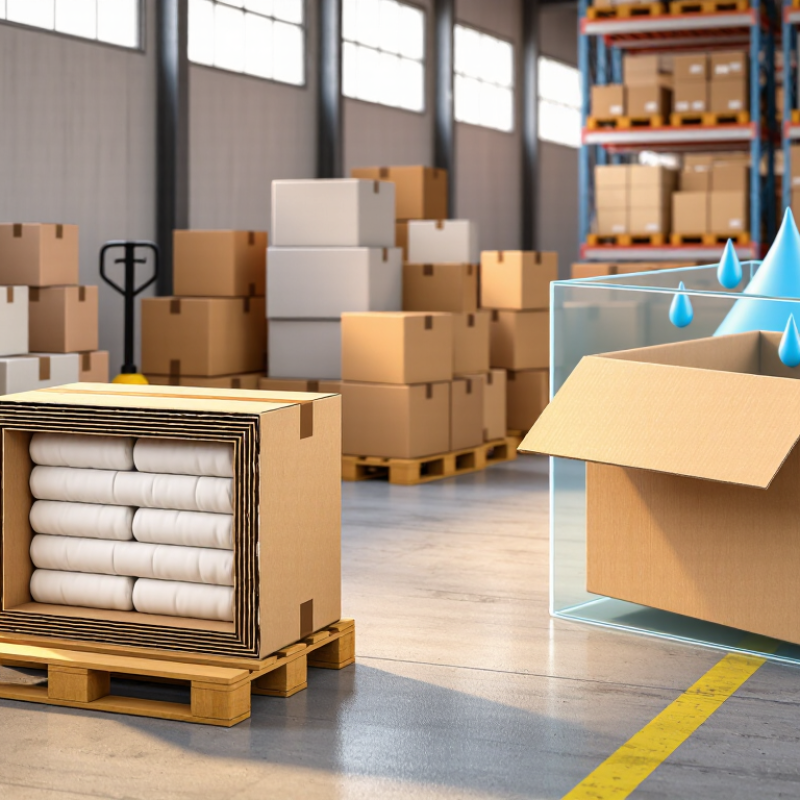
Shipping Conditions That Determine the Right Box Material
How to Choose the Best Box Material for Global Shipping?
Shipping conditions should guide the box material, not habit. More than 80% of global merchandise trade by volume moves by sea, according to UNCTAD’s Review of Maritime Transport 2023. Sea routes expose cartons to humidity, salt air, stacking pressure, and repeated transfers. A standard single-wall corrugated box may fail in a damp container. Double-wall corrugated board offers stronger compression resistance. Moisture-resistant coatings can help, but they do not replace proper sealing.
Air freight creates different risks. Rapid handling, vibration, and pressure changes can punish weak seams and oversized packages. The International Safe Transit Association recommends testing complete packaged products, including cushioning and closures, under simulated distribution conditions. That approach is more reliable than choosing material by thickness alone. Weight matters. So does internal movement.
Temperature changes deserve attention. The World Bank’s Logistics Performance Index 2023 evaluates reliability, tracking, and shipment timeliness across global supply chains. Delays can leave cartons in hot yards, cold aircraft areas, or humid terminals. Plastic film may protect against surface moisture, but it can trap condensation inside. That mistake is easy to overlook. For fragile goods, combine rigid outer walls with fitted cushioning and a moisture barrier. Then test the actual box size, load, and route. A perfect laboratory result may still miss rough handling.
How to Choose the Best Box Material for Global Shipping?
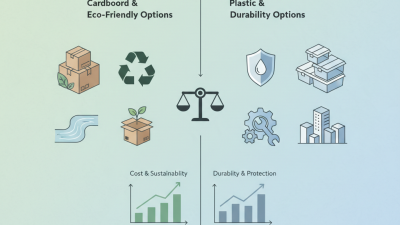
Shipping conditions determine whether moisture resistance, compression strength, impact protection, or recyclability should receive the highest priority.
Ratings use a 1–5 scale based on commonly reported characteristics of standard corrugated cardboard, plastic corrugated board, plywood, and molded pulp packaging. Actual performance depends on grade, thickness, coatings, closures, humidity, stacking height, and transport handling.
Key Box Materials and Their Structural Characteristics
How to Choose the Best Box Material for Global Shipping?
Choosing box material starts with structure, not appearance. In packing tests, I check compression strength, edge stability, and moisture response. Corrugated fiberboard remains practical for many shipments. Its fluted inner layer cushions impacts and separates the outer liners. Single-wall board suits lighter goods. Double-wall board handles stacking pressure better. Triple-wall construction adds stiffness, but increases weight and freight costs. A heavier box is not automatically safer.
Solid fiberboard has a dense, smooth structure with fewer weak points. It resists punctures well, yet offers less cushioning than fluted board. Plywood boxes use thin wood layers bonded across changing grain directions. This cross-layer structure limits warping and supports heavy loads. It also adds mass and needs careful moisture protection. Plastic boxes can resist water and repeated handling. However, rigid walls may transfer impacts directly to the contents. That detail is easy to miss.
For long international routes, I match the material to the load, route, and warehouse conditions. Moisture-sensitive products may need coated fiberboard, liners, or desiccant protection. Heavy equipment may require plywood, internal blocking, and reinforced corners. Always test a packed sample with vibration, compression, and short drop checks. Standards and carrier requirements should guide the final design. My own trials exposed mistakes, especially undersized corner protection. Some boxes looked strong but collapsed after damp storage. That result changed my specifications. There is still room for better testing.
Material Selection for Climate, Handling, and Transport Risks
Choosing box material starts with the route, not the product alone. I have seen strong cartons fail after weeks beside humid ocean air. Moisture softens paper fibers and reduces stacking strength. For tropical routes, use moisture-resistant coatings or a suitable inner barrier. However, added layers can complicate recycling and increase costs. That trade-off deserves an honest review.
Cold regions create different problems. Frozen materials may become brittle during loading and unloading. Corrugated board needs enough edge crush strength for tall pallet stacks. A heavier board is not always better. It may increase freight weight without improving real protection. Test the corners. Drop tests should reflect handoffs, conveyor impacts, and rough warehouse floors. Small compression failures often begin at damaged edges.
Transport duration also matters. Short domestic routes may need less protection than ocean shipments with repeated transfers. Select cushioning for vibration, not only visible impacts. Keep empty space controlled, but allow room for protective inserts. I once approved a box that looked secure, yet its inner fit was too loose. That assumption failed during vibration testing. Use recognized packaging test methods and record results by climate, load, and route. Review failures without hiding them. A practical material decision balances protection, handling demands, moisture exposure, temperature changes, and responsible material use.
Cost, Sustainability, and Compliance in Global Box Selection
Choosing a box for global shipping requires more than comparing unit prices.
A cheaper carton can cost more through dimensional-weight charges, crushed corners, and repacking labor. In warehouse trials, measure compression strength after humidity exposure, not only in dry conditions. Weight matters. A smaller, lighter box may reduce freight emissions and transport fees, but excessive material can weaken stacking performance.
Sustainability should be measured across the box’s full life cycle.
The European Paper Recycling Council reported an 82% paper recycling rate in Europe in 2022. However, recycled fiber may lose strength after repeated processing. Corrugated boxes often need reinforced edges, especially for long ocean routes. The OECD’s Global Plastics Outlook reported 353 million tonnes of plastic waste in 2019, with only 9% recycled. This supports fiber-based designs where moisture protection is not essential. Still, replacing every protective coating is not automatically better.
Compliance creates another cost boundary.
Check fiber sourcing claims, recycled-content rules, labeling duties, and extended producer responsibility requirements in each destination market. ISO 18601 provides a useful framework for packaging and environmental considerations, but local rules may be stricter. A box that passes a laboratory test can fail beside a wet container wall. That is the uncomfortable part. Select material after testing, not optimism. Record moisture, load, dimensions, and damage rates from real shipments, then revise the specification when evidence disagrees.