Leave Your Message
-
Phone
-
E-mail
-
Whatsapp

-
Whatsapp

China Top Drinks Packaging Manufacturers? This question deserves more than a simple supplier list. China’s Drinks Packaging industry includes glass bottle makers, PET producers, aluminum can factories, carton specialists, and flexible packaging companies. Each category serves different needs. A premium tea bottle may require thick glass, precise printing, and careful neck finishing. A sports drink may need lightweight PET, dependable caps, and high-speed filling compatibility.
Walter Soroka, author of Fundamentals of Packaging Technology, describes packaging as “the science, art, and technology of enclosing and protecting products for distribution, storage, sale, and use.” His statement explains why manufacturer selection involves more than price. Buyers should examine material safety, production capacity, mold control, quality testing, export experience, and environmental claims. Factory audits can reveal details that websites often hide, including dusty storage areas, inconsistent wall thickness, or weak carton protection. Small details matter.
This guide evaluates leading Chinese Drinks Packaging manufacturers through practical purchasing factors. It considers product range, customization, certifications, minimum order quantities, lead times, and communication quality. Some suppliers appear impressive online but lack stable production records. That possibility deserves attention. Rankings may also change by product type and market destination. There is no universal winner.
Reliable research should compare samples, inspection reports, and customer references. It should also confirm whether certificates match the actual factory. A beautiful sample proves little. Consistent delivery proves more. This introduction provides a clearer path for beverage brands seeking capable Chinese packaging partners, while recognizing that every purchasing decision still requires independent verification.
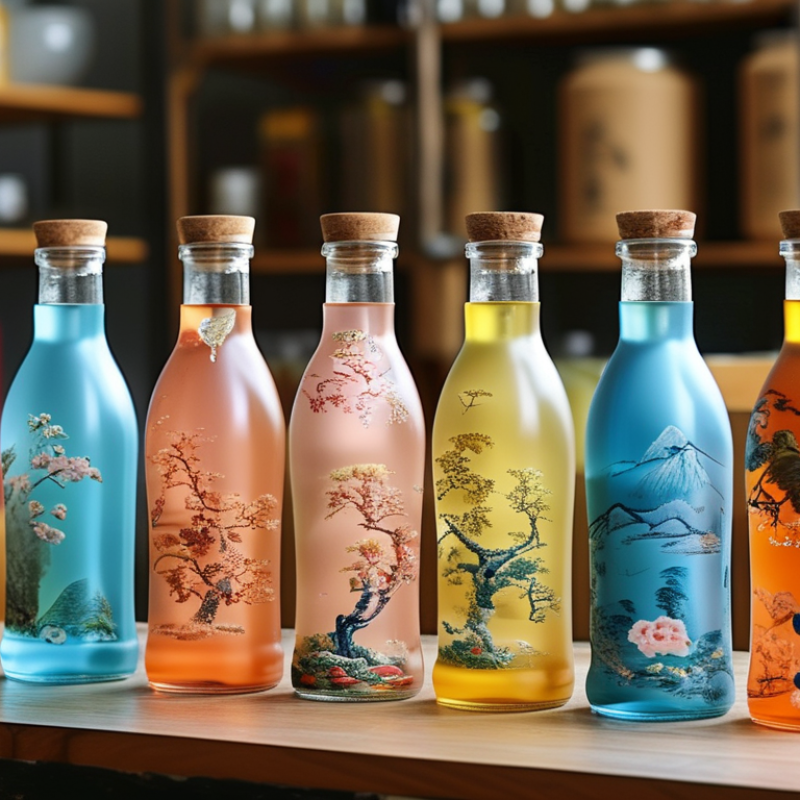
China has become a leading drinks packaging manufacturing hub because it combines materials, tooling, printing, and logistics in one industrial network. Manufacturers can source PET, glass, aluminum, paperboard, closures, and labels near production sites. This proximity shortens development cycles and reduces coordination gaps. It also supports customized shapes, barrier layers, lightweight designs, and smaller trial orders. In practical projects, engineers can adjust neck finishes, cap torque, wall thickness, and pallet patterns before mass production. Small details matter.
Competitive labor and large-scale automation help Chinese factories offer stable output at varied price levels. More importantly, experienced suppliers often maintain in-house mold workshops and testing rooms. They can check leakage, drop resistance, seal integrity, migration limits, and temperature performance. Reliable manufacturers also provide material declarations, batch records, inspection reports, and traceable quality controls. These documents help buyers compare suppliers with evidence instead of polished promises. An on-site audit remains valuable, especially when production changes between sample approval and full manufacturing.
The model still has weaknesses. Quality can differ sharply between factories, and low quotations may hide thinner materials or weaker inspection. Communication delays can affect artwork, dimensions, and delivery schedules. Buyers should approve sealed samples, define tolerances, test filling-line compatibility, and monitor early production batches. Testing should match the destination market’s food-contact requirements. Environmental performance needs careful review too; recyclable claims depend on local collection systems and actual material design.
| Evaluation Dimension | Verified Industry Data or Standard | Relevance to Drinks Packaging Manufacturing | Reference |
|---|---|---|---|
| Manufacturing Scale | China's manufacturing value added accounted for approximately 31.7% of global manufacturing value added in 2023. | A large industrial base supports integrated production of bottles, cans, closures, labels, cartons, molds, filling equipment, and inspection systems. | Ministry of Industry and Information Technology of China, 2024 |
| Export Capability | China's goods exports reached approximately RMB 23.77 trillion in 2023. | Established export procedures, freight networks, customs services, and international packaging experience help manufacturers serve overseas beverage markets. | General Administration of Customs of the People's Republic of China, 2023 |
| Container Logistics | Chinese ports handled approximately 295.9 million twenty-foot equivalent units (TEUs) of containers in 2023. | High container throughput supports the shipment of empty packaging, packaging components, and finished packaging systems to international destinations. | Ministry of Transport of the People's Republic of China, 2023 |
| PET Bottle Formats | Common commercial PET beverage formats include approximately 250 ml, 500 ml, 600 ml, 1 L, 1.5 L, and 2 L containers. | Bottle manufacturers can support multiple beverage categories, including water, carbonated drinks, juices, tea, and sports beverages, using different preform weights, neck finishes, and shapes. | Common international beverage packaging specifications |
| Aluminum Can Formats | Common beverage can capacities include approximately 250 ml, 330 ml, and 500 ml. | Domestic metal-forming, printing, coating, and end-making capabilities allow suppliers to provide both standard and customized can specifications. | Common international beverage packaging specifications |
| Aseptic Carton Formats | Widely used aseptic beverage carton sizes include approximately 200 ml, 250 ml, 500 ml, and 1 L. | A broad converting and printing supply chain supports packaging for milk drinks, juice beverages, plant-based drinks, and other shelf-stable products. | Common international beverage packaging specifications |
| Food-Contact Compliance | China's food-contact standards include GB 4806.5 for glass products, GB 4806.7 for plastic materials and articles, GB 4806.8 for paper, paperboard, and paper articles, and GB 4806.9 for metal materials and articles. | These standards provide a domestic compliance framework for material selection, migration testing, additives, and finished packaging safety. | National Food Safety Standards of the People's Republic of China |
| PET Neck-Finish Compatibility | The 28 mm PCO 1881 neck finish is a widely used specification for carbonated soft-drink and water PET bottles. | Use of recognized neck finishes improves compatibility among preforms, caps, filling lines, and bottle-production equipment. | International Plastics Industry Standards |
| Material Diversity | Drinks packaging commonly uses PET, HDPE, aluminum, glass, paperboard-based laminates, polypropylene closures, inks, coatings, and adhesives. | China's extensive petrochemical, metal, glass, paper, chemical, tooling, and converting sectors enable multi-material sourcing within one manufacturing region. | Material categories used in commercial beverage packaging |
| Customization Capacity | Typical customization options include volume, bottle geometry, preform weight, neck finish, cap type, label format, surface decoration, barrier layer, and secondary packaging. | A broad network of mold, printing, injection-molding, blow-molding, and assembly suppliers makes small design changes and multi-format programs easier to coordinate. | Standard practices in beverage packaging engineering |
| Sustainability Direction | Current packaging development focuses on lightweighting, recycled PET content, mono-material structures, recyclable designs, water-based inks, and reduced packaging components. | The combination of material-processing capacity and recycling-policy development allows manufacturers to offer lower-material-use and more recyclable packaging solutions. | China's plastic pollution control and circular-economy policy framework |